Friday, May 31, 2013

National Park Passbook Program

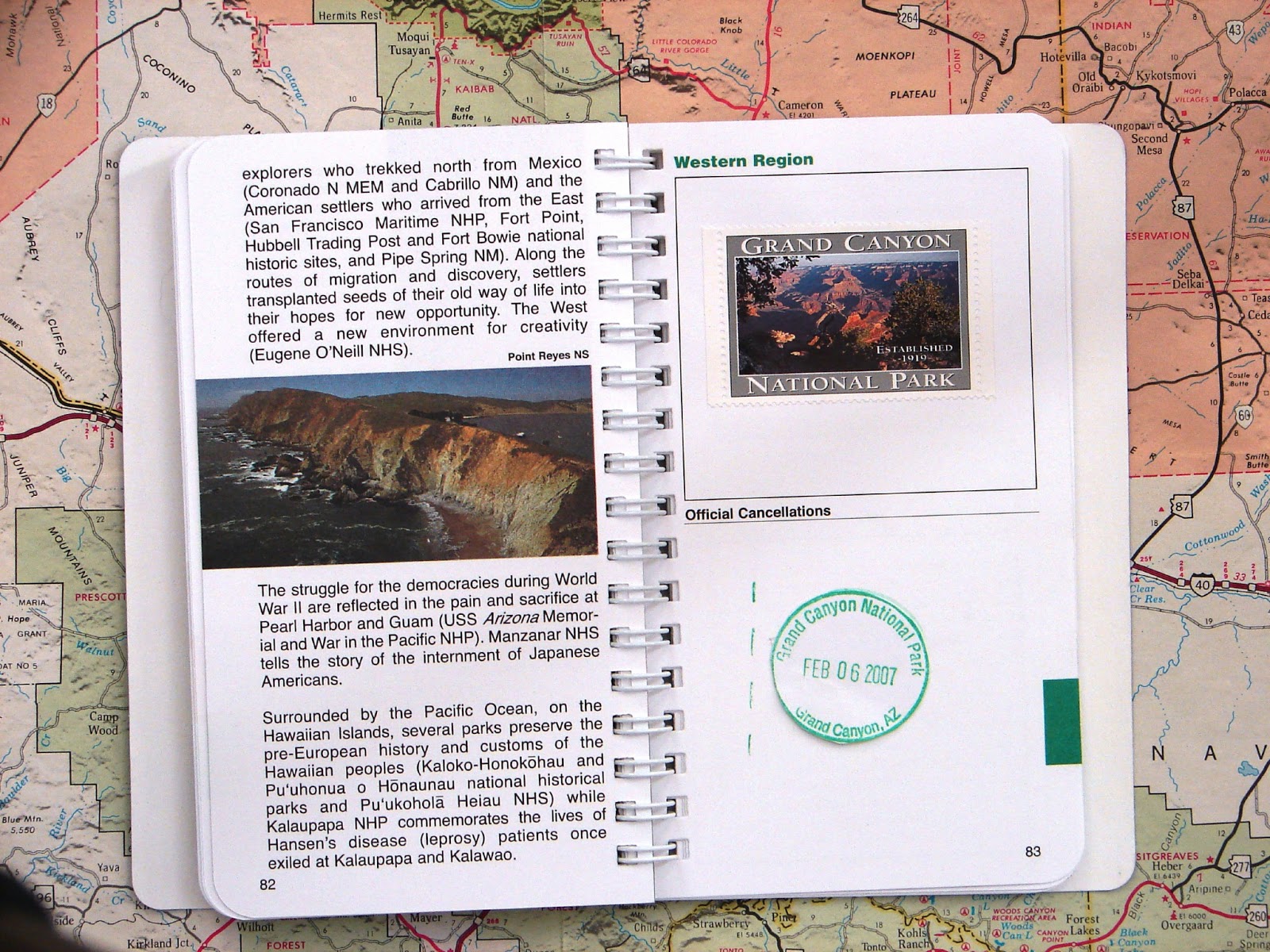
     As your family begins to take to Arizona’s highways this summer for the family vacation, be sure to consider visiting one or more of the 21 National Parks and Monuments of Arizona.  To make your family visit even more educational and fun, join the National Park Passport Book and Cancellation Stamp Program!

     Started in 1986 by Eastern National, a non-profit partner of the National Park Service, national park and monument visitors can acquire at each site and at no cost, one or more cancellation stamps for their passport book.  These cancellation stamps not only document the date of the family visit, but add to the feeling of fun and  adventure as your family searches out the exact location of the park’s/monuments’ cancellation stamp or stamps.

     And when your family leaves Arizona to travel the highways across our wonderful country, take your National Park Passport Book along.  There are about 390 American National Park units across America with over 2,000 cancellation stamp sites waiting for your family to discover. 

     Passport stamps come in various colors, highlighting the 9 passport regions that the stamp can be obtained.  Adhesive stamps can also be purchased to affix to the passport book.  Nine such photo stamps are issued once a year, one for each passport region. In the 20+ years of operation, over 1,400,000 National Park Passport Books have been sold.

     National parks must be created by an act of Congress.  They are usually created to set aside natural beauty or natural phenomena – like a petrified forest.  They are usually large in size with many different uses and visitors.  Arizona is lucky to have 3 national parks.

     National monuments are created because they contain prehistoric or historic objects or possess “things” of scientific interest.  Their size is unimportant and can be created by an act of Congress or by the President of the United States.  There are 92 national monuments in the United States.  Arizona has the most of any state with 18. 

     Who collects National Park Cancellation Stamps?  Boy Scouts, Girl Scouts, RVers, AARP members, home schoolers, vacationing families, geocaching adventurers and grandparents sharing the adventure of the parks and monuments with their grandchildren; anyone who loves the historic and natural treasures of Arizona and America.

     People collect National Park Cancellation Stamps to learn about the parks.  Some collect because they enjoy the competitive search in finding the stamps.  Others collect the stamps because they enjoy sightseeing the wonders of America and preserving memories of their vacations. 

     So, this summer when you head down the highways of Arizona and America, keep an eye out for those brown and white national park and monument signs.  Pull into the visitor center and gather up your National Park Passport Book.  Find the cancellation stamp site and document your visit for that day and for your the many, many years of family memories!




Sunday, May 26, 2013

Memorial Day 2013 - An Honorable Pima Warrior

    The American soldiers has been a part of the Arizona story since the men of Stephen Watts Kearny’s Army of the West marched down the Gila Trail in 1846.  The Buffalo Soldier served with honor and won everlasting fame during the Apache Wars.  Prescott cowboys heard their nation’s call and became a part of Teddy Roosevelt’s Rough Riders.  A young Pima Indian, Matthew B. Juan, was the first Arizonan to die in World War I.  A young Phoenix Union High School graduate learned to fly and became America’s greatest “Balloon Buster” over-there!
    Yet, Arizona’s the most famous soldier was born on the Gila River Indian Reservation town of Sacaton, a short  57 miles south of Anthem.  He grew up the son of a farming family who struggled to coax enough crops from the desert soil in order to live.  When American once again found itself engaged in the great World War II, this Arizona son, this Ira Hayes, volunteered and became a United States Marine.
    As Ira left his Arizona home, his tribal leaders told him to be an Honorable Warrior and to bring honor upon his people.  Ira never forgot those words and through three major battles in the Pacific, he never failed in service or in honor.
    It was in that third battle, a place called Iwo Jima, that this Arizona soldier would forever become a symbol of America.  On February 23, 1945, the fourth day of the battle that United States Marines fought their way to the highest ground of that island, a hill called Mount Suribachi.  Around 12 noon, 6 marines, including Arizona’s Ira Hayes, raised the American flag for all on the island to see.  Photographer Joe Rosenthal snapped the most famous picture of World War II and maybe in all of American history.
    The fight for Iwo Jima would continue for another 31 days, until March 26, 1945.  Over 6,800 United States Marines died on that volcanic, Pacific island.  Of the six marines who raised that grand ol’ flag, only 3 came off the island alive. One of those three was Ira Hayes.
    The three surviving flag raisers became instant heroes in America once the picture of the flag raising ran in American newspapers.  The three were ordered to leave their fellow marines still fighting in the Pacific and return to the United States.  There they would become a part in selling War Bonds.  For Ira Hayes the idea of being called a hero did not sit well, for he believed the true heroes were those so many killed on the islands of the Pacific.
    Ira Hayes was “wined and dined” across America.  Too many people wanted to celebrate with him by buying him another drink.  He became dependent on alcohol and became a drifter and a loner.
    In 1954, Ira Hayes was the guest of honor at the dedication of the Iwo Jima Memorial in Washington, D.C.  He was asked how he liked all the pomp and glory.  He replied, “I don’t!”
    On January 24, 1955, Ira Hayes, an Honorable Pima Warrior and a United States Marine, fell drunk into a reservation irrigation ditch and died.  For this Arizona soldier, his life story was now complete.
    Yet today, in that small Arizona town of Sacaton, Arizona, one can visit the Ira Hayes Memorial Park.  It is not so much in the way that modern Arizonans might measure a park, but it is truly a park that is named after a real American soldier and a real American hero.
    So on this Memorial Day 2006, if you are looking for something a little different and special to do, drive on down to Sacaton with a lunch and spend a little time at a park named for Ira Hayes.  And, when you look at the plaque of that famous picture, of those six marines raising that flag, look at the marine to the far left, the one whose hands have already let go of the pole.  For, you see, that soldier was and always will be the Arizona Honorable Warrior and United States Marine, Ira Hayes.


Thursday, May 9, 2013

"Is This Heaven?" - The X Diamond Ranch

Looking for a great place to escape the Valley's heat this summer?  The X Diamond Ranch near Greer just might be your solution.  Enjoy!

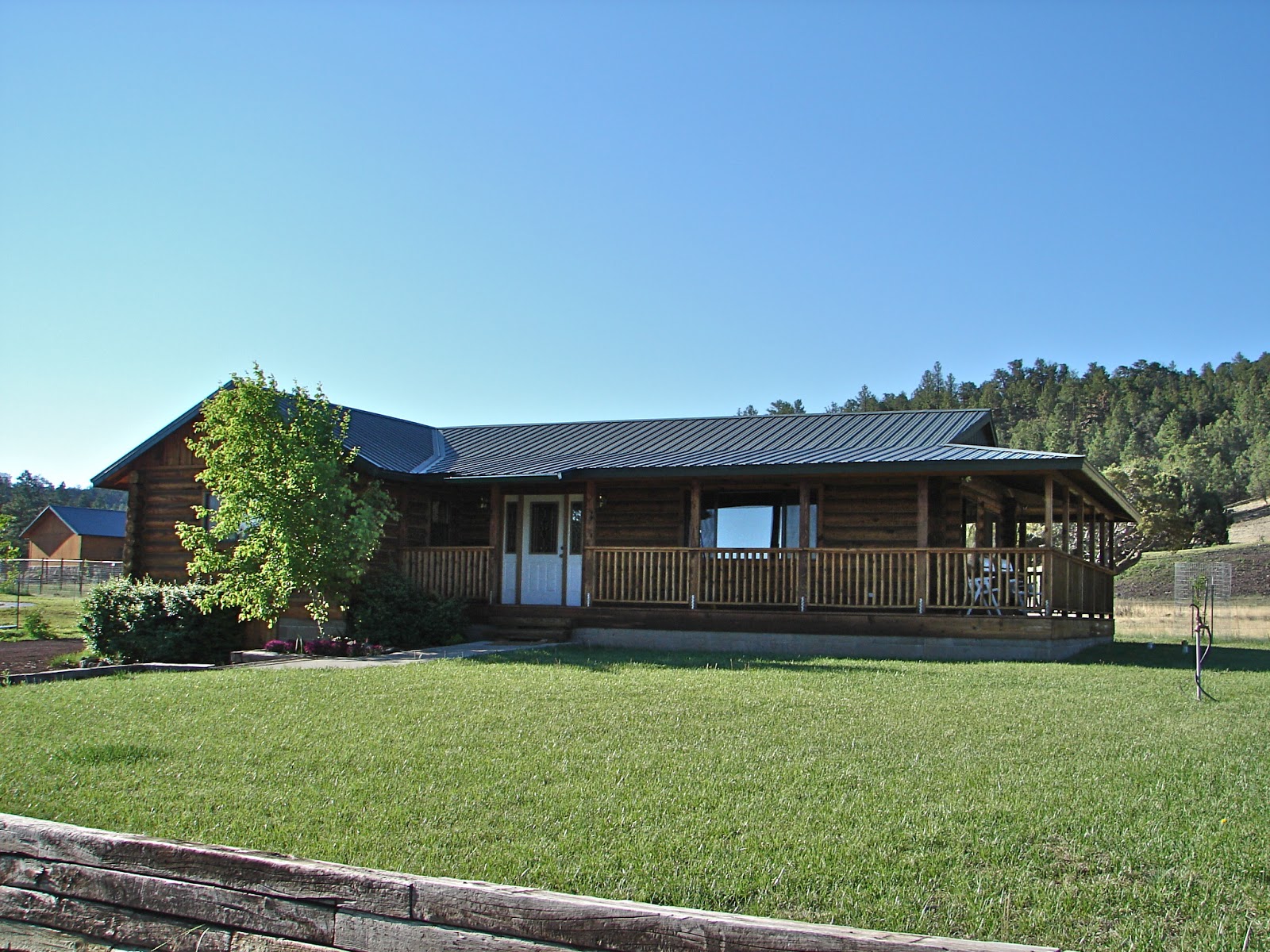
    “Is this heaven?” the dude from Phoenix asked as he stepped out of his SUV into the cool breeze of the X Diamond Ranch.  “Nah”, responds owner ‘Wink’ Crigler, “but it’s mighty close to it!”
    And  “close to heaven” is a pretty accurate description of this historic ranch located in beautiful South Fork Canyon near Greer, Arizona.
    John and Molly Butler first came to the beautiful Greer Valley in the mid 1880s.  Molly cooked and hosted thousands of guests in the Molly Butler Lodge.  John added to the family income by guiding such folks as Zane Grey and Theodore Roosevelt into the backwoods of the White Mountains.
    In the early 1900s John and Molly Butler moved into South Fork Canyon and established the X Diamond Ranch.  The working cattle ranch is still owned and operated by their descendants who now share the ranch’s treasures with folks from around the world.   
    Six, rental log cabins allow visitors to spend a few days among the tall, ponderosa pines in the pristine mountain air.  Ranch visitors can fly-fish for trout in Little Colorado River or horseback ride on the many canyon trails.  And when you fish the streams and ride the trails of the X Diamond Ranch, you will be among some of Arizona’s most spectacular natural wonders. 
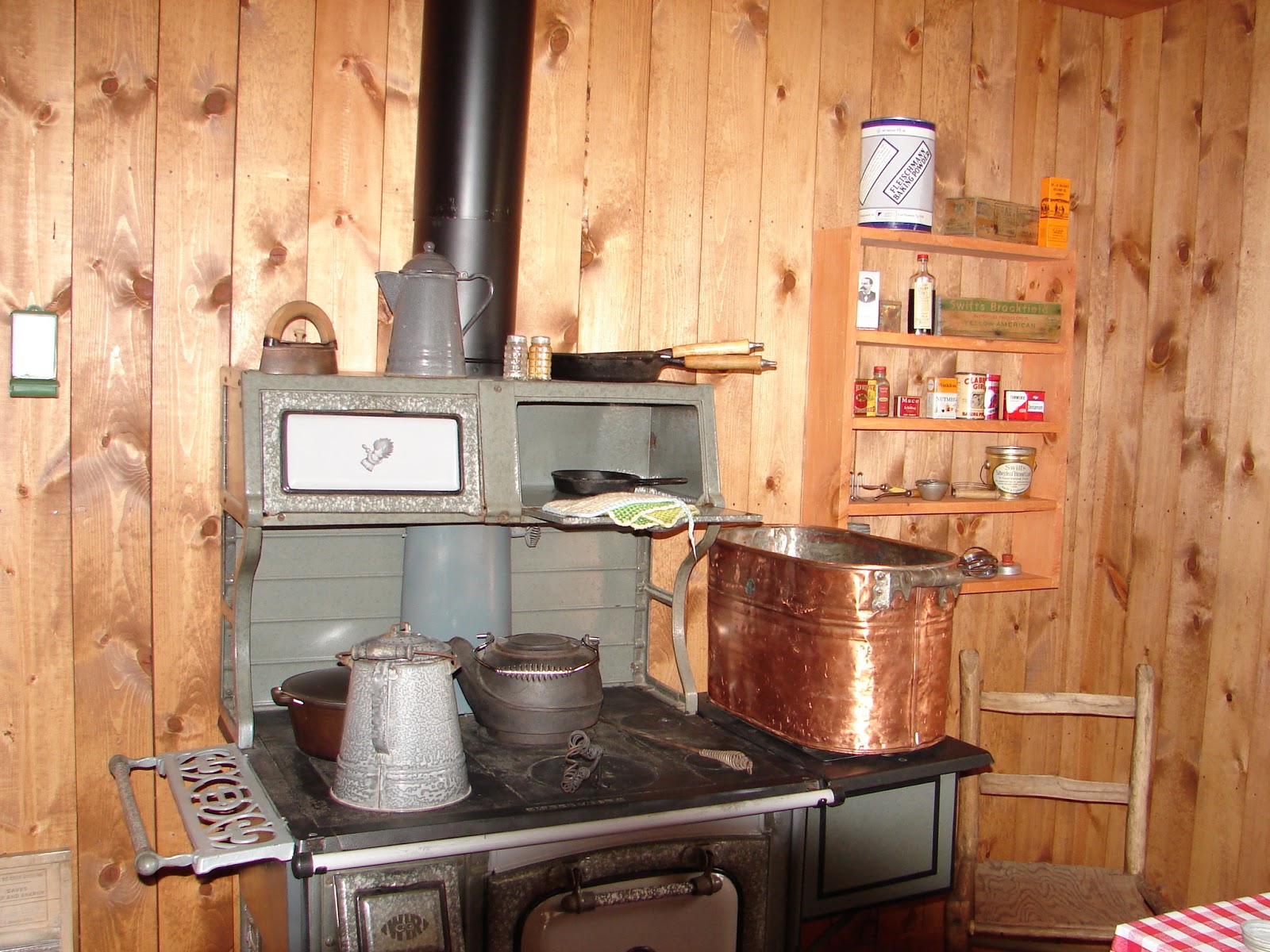
    History abounds on the X Diamond Ranch.  A visit to the ranch’s Little House Museum will take you back in time to the old west.  Your ranch guide will share many a tale about the “pioneers, preachers and outlaws” that once called this area their home.
    For those interested in Native American history, the X Diamond Ranch is the location of the Little Bear Archaeological Site.  Ranch visitors can participate with the site’s archeologist in an actual scientific dig.  Archaeological tours to canyon petroglyphs sites are also available.
    “Is this heaven?’  Nope, but any day spent at the X Diamond Ranch will certainly be some heavenly time spent in a real, Arizona paradise.
    The GPS coordinates of the X Diamond Ranch is
N 34 05.123’ W 109 25.180’.  To learn more about the X Diamond Ranch, visit their web site at
www.xdiamondranch.com


Saturday, April 27, 2013

Standing On Top Of Arizona

    As the Valley of the Sun approaches 100 degrees for the first time in 2013, it just might be time to begin to think about some summer escapes to cooler destinations.  The ultimate summer escape has to be the 4 1/2 mile climb to the top of Humphreys Peak so you can forever brag that you too "Stood on Top of Arizona!"

    The first eleven photos belong to a young man named Rob Brinkerhoff who so kindly allowed us to use his digital pictures for our In&Out story; the last 3 pictures are ours.  We last climbed Humphreys Peak 23 years ago, long before any of us had ever heard of a digital camera.

    This is one of the great hikes of Arizona so if it might be something you would like to do this summer, let us suggest you start planning now.  Here is our story…


     Let us suggest that you arise early one of these warm, summer mornings and leave your Sonoran Desert home, traveling north on I-17 toward Flagstaff.  Over the next 2 hours of time you will travel through what zoologist Clinton Hart Merriam once suggested are 6 of the 7 lifezones found in North America.  For awakening in our low desert home to walking through the natural biome above the Arctic Circle is possible when our goal this day is completed by “Standing on Top of Arizona!”
     Humphreys Peak rises 12, 633 feet above sea level and is the tallest mountain in our state that is credited with having 3,928 official mountains peaks.  Located just 14 miles north of Flagstaff in the San Francisco Mountains, this ancient volcano once again becomes available for Arizonans to assault its summit as the winter snows melt with the warmth of the summer sun. 
     Warmth is a relative thing when one climbs to the top of Humphreys Peak.  Even in the climbing months of July, August and early September, the temperature on the summit can be in the mid-30s and a cool wind will always be blowing.  A light jacket, stocking hat and gloves are a must along with plenty of water and trail snacks.
     The journey to the “Top of Arizona” begins at the Arizona Snowbowl.  Here is found the 9,300-foot high trailhead for the 4.8-mile climb to the top of our beautiful state.  Some who have made this hike contend that it is the “longest 4 1/2 mile hike in the world.”  
     From the trailhead the first ¼ mile passes through a flat, open meadow full of Alpine iris and other summer wildflowers.  Soon the adventurous hiker arrives at the edge of an old-growth forest of Douglas and White fur, Englemann spruce, aspen and ponderosa pine trees.  The trail begins a gradual but continual rise up through this forest and the side of the majestic mountain with a series of long, switchbacks. 
     For almost 3 miles one has walked through some of Arizona’s most beautiful forest.  At the 10,000-foot level a massive volcanic rockslide, approximately 100 feet wide and flowing hundreds of feet down the mountainside is found.  This ancient river of stone, frozen in time, is a graphic reminder of this mountain’s violent origin.
     Climbing even higher, the hiker now notices that one’s breathing is a little deeper and harder.  At the 11,000-foot level, the trees of the forest begin to disappear.  Timberline is reached at 11,400 feet and the bristlecone pine found here and above are bent and twisted into hideous shapes due to the year long howling of the wind.  These ancient pines, considered by some as the oldest living thing on earth, began growing on this mountain at the time the pyramids of Egypt were being constructed.
     The Humphreys Peak trail now becomes rockier and evidence of rockslides caused by the melting snows of winter is everywhere as one climbs.  Above the timberline all trees slowly have disappeared and the only tundra found in Arizona above the 11,800-foot level now replaces the forest.
     Mt. Agassiz is now in view and at an elevation of 12,356 feet, it is second only to our goal in rising above Arizona.  At 11,800 feet hikers also arrive at what is known as the saddle and the connecting ridgeline between Mts. Agassiz and Humphreys.      Here too one will see for the first time the goal, the summit of Humphreys Peak, some 870 feet higher and still another mile away.
     From this point, the trail to the top is a series of switchbacks over basically a cinder pile of loose talus and one’s footing could be very treacherous.  In addition, the majestic mountain does not give up its glory easily, as 3 false summits appear and pass as the weary hiker makes the final quarter mile journey and 150 feet rise to “Stand on Top of Arizona!”
     In our Grand Canyon State one’s legs can take them no higher than to the top of Humphreys Peak.  You are truly standing on Arizona’s rooftop, some 2.4 miles above sea level, with a panoramic view like no other.   This is not an easy Arizona hike and one should train well before attempting it.  But if you make the effort, it will become one of your most treasured memories of getting out and finding Arizona. 


Tuesday, April 23, 2013

Zane Grey & Lovely Payson


     How many of us were introduced to the American West through the novels of Zane Grey?  And since Payson has made the effort to preserve some of the history of this great writer, well, Payson just became a "must visit" location for "Finding Arizona." 
      

Payson, Arizona is the gateway city for those escaping into the Mogollon Rim Country of Arizona.  Too often travelers just pass through this mile-high community and never stop to enjoy the historic sites found in this old, lumbering town.  One of Payson’s most famous sites is found at Green Valley Park where the replica cabin of author Zane Grey is located and open for the public to visit.
Zane Grey is known as the Father of the American West.  He was given that title for writing 57 novels, 28 of whose storylines were based in Arizona.  Those novels told the stories of America’s Manifest Destiny and of the conquest and settlement of the American West.  His books would be turned into 130 movies and 145 television episodes of Zane Grey Theater.  Not only was Zane Grey the greatest of western storytellers but also he was also a sportsman, avid adventurist and a record-setting fisherman.
Born in Zanesville, Ohio in 1872 young Zane grew up loving baseball, fishing and writing.  His baseball skills won him a scholarship to the University of Pennsylvania where he studied to be a dentist. 
In 1907 he traveled with to the North Rim of the Grand Canyon to trap mountain lions.  He journaled about this adventure during his entire trip and those field notes would become, in 1910, the bases for his first best selling book, Heritage of the Desert.  His best known book, Riders of the Purple Sage, was published in 1912.  By 1915 Zane Grey had 15 books in print.
The success of Riders of the Purple Sage allowed Grey to begin his own movie company which he soon sold to Jesse Lasky, founder of Paramount Pictures.  Over the years Paramount Pictures would turn many of Zane Grey’s books into motion pictures.
Zane Grey would become one of the world’s first millionaire authors.  His financial success allowed him to spend a part of each year traveling and seeking more wilderness adventurers from which he would gleam the plots and characters for another book.  He would then spend time along the Rogue River in Oregon, living in a rustic cabin located on his favorite mining claim or living in another of his rustic cabins near Tonto Creek on the Mogollon Rim in what he called “my beloved Arizona.”
Grey built his Mogollon Rim haven in 1921 as a place of solitude to escape and write.  He also loved the abundant wildlife found in the Rim Country that allowed him to hunt and fish when taking a break from his writing.  But that same passion for hunting and fishing brought him into conflict with the Arizona Game and Fish Departments and Zane Grey left his Arizona cabin forever in 1929.
Zane Grey’s Arizona cabin was left abandoned and fell into disrepair.  It was not until 1962 that a Phoenix resident, Bill Goettl, who with his brother had invented the evaporative cooler for Arizona’s desert homes, bought the Grey cabin, rebuilt it and turned it into a popular tourist destination. 
Zane Grey’s refurbished cabin would now see over 20,000 visiting tourists each year for the next 30 years.  Then in 1990 the historic cabin became one of the tragic victims of the terrible Dude Fire that roared through this part of Rim Country consuming over 30,000 acres of pristine, ponderosa pine forest.  Many thought that the Zane Grey story in Arizona would now be lost and forgotten in the ashes of this tragic fire.
But even though Zane Grey’s cabin was gone, his memory for the thousands of people who loved his novels was not.  In 2003 the Zane Grey Cabin Foundation was formed with the major goal of rebuilding a replica of Zane Grey’s Tonto Creek cabin.
A home was found for the new cabin in Green Valley Park near the historic district of Payson.  Funds were raised and old plans were re-drawn that resulted in the opening of the Zane Grey Cabin to visitors on October 15, 2005. Once again those who loved the stories of Zane Grey could come to gaze at the bear skin rug that lies in front of the petroglyph decorated fireplace mantle and remember the man, Zane Grey, who became the Father of the American West. 
Zane Grey’s cabin is operated by the Northern Gila County Historical Society in Payson, Arizona. The society oversees both the Zane Grey Cabin and the Rim County Museum at Green Valley Park on West Main Street.